 By Kairo Aahron
Indian festivals are closely connected to traditions, food and meaningful rituals. During Teej, in particular, a variety of sweets are offered on the festive table. Whether rich desserts or simple prasad, each preparation adds a special touch to the celebration.
Most importantly, in some festive rituals, traditional offerings such as Panchamrit hold a significant place. A simple panchamrit recipe is followed during this sacred offering at home. Continue reading to explore traditional Teej sweets and other food ideas for the festival.
7 Traditional Teej Sweets Popular During Teej Festivities
During the Teej festival, people enjoy special meals and traditional Teej sweets. These dishes are prepared and served to bring familiar flavors to the occasion. Here are seven sweet treats to make or eat!
Ghewar
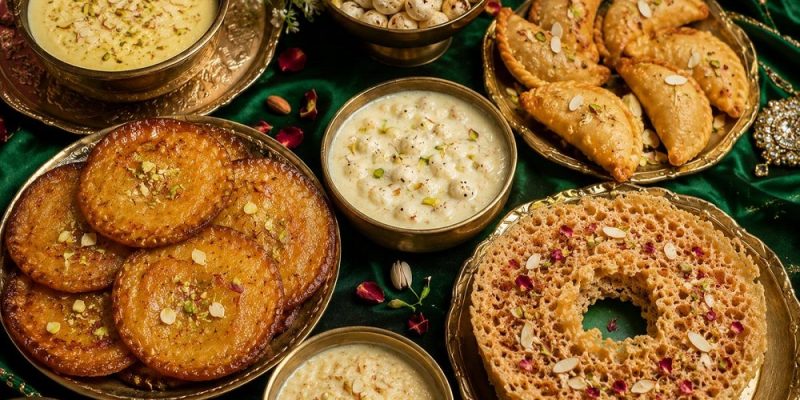
Ghewar is a much-loved Rajasthani sweet popular during Teej and other festive celebrations. It has a honeycomb-like texture and is typically made with flour, ghee, sugar and water. Ghewar can be served plain or filled with rabri, nuts or saffron. It is crisp in texture and sweet in flavor, making it a popular choice during festivals.
Malpua
Malpua is a soft, sweet-flavored Indian pancake cooked with a batter of flour, milk and other ingredients. It is normally fried and dipped or served with sugar syrup. Malpua is often flavored with cardamom, fennel or saffron. It is frequently served warm and pairs well with creamy rabri.
Kheer
Kheer is a classic Indian dessert prepared by cooking rice with sugar and milk. It is flavored with cardamom, saffron and nuts. This slow-cooking process gives it a creamy consistency and rich flavor by allowing it to simmer for some time. Kheer can be served chilled or warm, depending on the Teej meal.
Coconut Laddoo
Coconut laddoos are simple festive sweets made with grated coconut and condensed milk or sugar. They are soft and have a pleasant coconut flavor. Cardamom and chopped nuts add extra taste. They are also easy to serve during any family gatherings.
Rabri
Rabri is a well-known creamy dessert with a thick texture, made by reducing milk on a low flame. For flavor, ingredients such as sugar, cardamom, saffron and nuts are sometimes added. Rabri is served alone or sometimes even paired with sweets like malpua and ghewar. Its rich texture adds to a festive dessert spread.
Gujiya
Gujiya is a very popular Indian dessert filled with a sweet mixture and has a crisp outer covering. Traditional fillings include khoya, coconut, nuts and sugar. After adding the filling, the dough is formed into a crescent shape and baked until golden brown. Gujiya is used mainly on festive occasions and adds variety to a traditional sweet platter.
Saffron Rose Nut Smoothie
A saffron rose nut smoothie provides refreshing variation in festive menus. It can be made from milk, saffron, rose flavoring and various types of nuts. The beverage has a creamy texture with a floral, nutty taste. This smoothie is typically served chilled during special occasions as a cold beverage with other variety sweets.
Conclusion
Festive food adds a separate charm and meaning to special occasions. Traditional spices keep culinary practices alive during family gatherings. Every event comes with a chance to savor delicious meals and create memories together. A well-planned festive menu includes a mixture of simple and new choices with classic favorites.
Understanding these food traditions helps the younger generation connect with the stories and traditions behind Indian festivals. With preparation beforehand, festive meals can be happy, meaningful and memorable.